Saturday, March 7, 2015

A Brief History of Yoga Clothing


Once upon a time, I was a clothing designer in New York City. It was a rough world, where they loved you one day and wouldn't "buy you" the next. I'm lucky I got out of the rag trade before it ate me up. Yet I've always been fascinated with how folks adorn themselves and it's in my DNA to watch styles change and evolve (sometimes to my dismay), even in the yoga community.

Waaay back in the day, when only men did yoga, the

dhoti was the regulation garb. The dhoti required the ability to master a complex wrapping technique to arrange the fabric just so. Once it was on, it allowed great freedom of movement!

In the very first yoga classes that I attended in the 1960's, folks were wearing white yoga suits. This was a short lived style inspired by the Kundalini community, great for sitting and meditation, not so great for trying to get your foot behind your head.  There was an innocence and modesty to this style that I loved. But it didn't last long...

Along came BKS Iyengar, who modernized the dhoti into shorts, a radical move at the time, which went against the tradition of his teachers and peers. There was a teensy problem with regular shorts, though. In various wide legged and inverted poses, one's intimate parts were all too easily exposed to the world. Ergo the birth of the yoga bloomers, or as we used to call them, yoga diapers, made by Hugger Mugger and still available today. They feature a snug band around the thighs that prevents peek-a-boo in class. In the 1970's, virtually all yogis, men and women, wore this regulation uniform of t-shirt and yoga bloomers. Personally, I never wore yoga diapers because, with my skinny legs, they made me look like Minnie Mouse! 

Instead I was inspired by Jane Fonda, the budding fitness industry, and Flashdance, and wore leotards over tights, often with leg warmers. The problem of having to get undressed to use the bathroom was an impediment, until a dancer friend of mine imparted the secret knowledge of pulling all the material to one side to do the deed. A distasteful aspect of this fashion was the tendency for women to wear black tights with white panties you could see underneath their
This is the unitard we all wore, with the criss cross straps!
 leotards. I never got that one! 

There was the brief period of the yoga unitard, or what we dubbed the yogatard, and what I called my sausage casing. You really couldn't go to the bathroom without peeling this whole thing off! And, to my amazement, Marie Wright Yogawear still makes these! 

It was a real relief when the yoga fashion time machine marched on and we realized we could wear two separate pieces of clothing, unattached to one another. The era of the yoga capri was born, along with the great innovation of the foldover waistband. Super comfy; why didn't anyone think of this before?! When these waistbands first came out and weren't around much, I called Hugger Mugger and asked if they'd be making them. The woman there said, "No woman wants more bulk around her waist. These are a fad that will fade." She was epically wrong, as this waistband has become the norm for women's yoga pants.

I would be remiss in my history of yoga fashion if I 

failed to mention Be Present yoga pants, which everyone seemed to wear for about five minutes before yoga fashion marched on. They are made of cool stretchy fabric, move when you move, and are kinda dorky. Not many people seem to wear them anymore, but as I get older I become more and more a fan of awkward and dorky, so I still wear mine.

Currently, in the real world of the yoga studio we're in a phase of ankle length leggings for women, which I love because of the great variety of creative and unusual prints. 

In the alternate universe of the media and public figures, we've been treated to (or assaulted with?) some yogic style excess that is truly hedonistic. Tara Stiles being driven around New York in a glass box in which she does scantily clad yoga, and in the hot yoga subculture, I know the uniform for women is a bra and shorts. But that's not my subculture and I just stick my fingers in my ears and say: "la la la," and pretend I don't know that it's happening. I've got a healthy bit of discernment arising on the border between personal style and hyper-sexualizing the yoga room. We'll save that for another time.
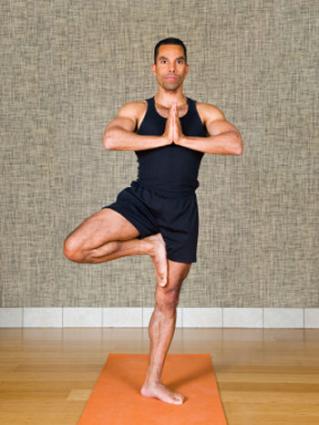
In the men's department, it's pretty same-same. The biggest fashion controversy seems to be: shirts on or shirts off in yoga class? We actually polled our students a few years ago, and they overwhelmingly preferred that men keep their shirts on; even the men voted this way. 

We've come a long way from the dhoti and the baggy cotton yoga suit. Any predictions on what we'll be wearing to do yoga in the next ten years?


In the meantime, GET PHYSICAL however you can! 

Love and peace, Denise Benitez

Friday, February 13, 2015

Be Attached. Be Very Attached.

"Attachment is an inborn system of the brain that evolved to keep human children secure and safe. Reflective, integrated functioning develops in adults who emerge from secure attachments."  Dan Siegel

"Attachment is the origin, the root of suffering; hence it is the cause of suffering." The Dalai Lama

I've often been dismayed over the years when yoga students guiltily start a sentence with "I know I shouldn't be attached, but..." and I have often pondered how this meme of non-attachment became so strongly ingrained into popular culture. Now that I am studying psychology, I am learning about attachment theory, which emphasizes the importance of early childhood positive attachment to caregivers in forming a stable sense of self, or what is called a secure base. It is human and necessary to be attached, and attachment theorists have even identified four types of attachment:

     *Secure Attachment - the optimal scenario for an infant and young child, where most of their wants are acknowledged, if not always fulfilled.
     *Insecure-Avoidant Attachment - the result of having a caregiver who is rejecting of the child's needs, resulting in a child who will not seek to communicate, connect, or have attention.
     *Insecure-Ambivalent Attachment - the result of having a caregiver who is inept but responsive to intense behavior by the child, such as tantrums, resulting in a controlling, manipulative style of interacting.
     *Insecure-Disorganized Attachment - the result of a caregiver who behaves in erratic, extreme, and eruptive ways, a parent who is dangerous and also needed for survival, resulting in a child who can be disoriented, frozen and fearful.

Our human and animal selves have a need for structure, continuity and consistency. Without attachment, human partnerships wouldn't provide the container that they optimally do, within which we can rest into our creative nature. To the primitive part of the brain, abandonment equals death. John Bowlby's studies on attachment showed that the drive toward attachment is stronger than the sexual drive. Remember that in our adult lives attachment can be to people and it can also be to
mountains, forests, art, animals, literature, beauty, myths, music and any of the many avenues that contribute to a rich inner landscape and to the opening of imagination.

And yet, and yet. We must all grow up and out of the childhood form of attachment, and go through the process of differentiation, which optimally occurs in young adulthood, and then the process of individuation, which begins later in life and can last until the end of life. Individuating includes the courageous examination of our own hidden darkness. Because no parents are perfect, we have all repressed potent material that is waiting to come to the surface and inform our daylight lives, and when life feels secure enough, or when life smashes things apart enough, this work can be done. You will know when this work is ready to happen because you will become more fascinated with deep questions and inner adventure, and more curious than judgmental about your emotions and those of others.

To return to the Buddhist idea of attachment being the root of suffering, I believe this is a misunderstanding or mis-translation, and that the modern psychological term "co-dependent" might be nearer to what is meant. Sometimes Buddhist commenters even use the word "clinging" in place of the word "attachment," which feels right. And what Buddhism and other sacred lineages bring to modern culture is invaluable as neuroscience is showing us that meditation and mindfulness change the physical structure of our brains.

We are always growing into our souls and into becoming more fully human. In the sacred space of meditation and mindful movement, of creativity and humility, and in growing comfort with our own company, with its light and shadow, we are replenished.

As depth psychologist Ginette Paris says, "The capacity to love implies a basic comfort with one's own quiet company." In learning the art of silence and solitude, we can become deeply attached to our own good heart.


Thursday, July 31, 2014

Who Took My Yoga?

"The most important thing is always the least apparent.”
James Hillman

I didn't know when I walked into my first yoga class in 1968 at the age of 16 that yoga would become one of the guiding forces of my life. I only knew that when I came out of those classes I felt more alive than I'd ever felt, and that I wanted more. In a small loft studio in Boston, which held 10 people maximum, Carol
Yoga Journal 1977
Nelson (she still teaches today) guided us through classical Iyengar yoga. We held the poses a LONG time. There was no such thing as flow, or warm-up or cool down. We would practice a few poses, get some props, do some poses, put the props away and get a chair. And repeat.  The idea of putting music on would have been laughable. We wore baggy cotton yoga pants or tights and leotards. Men wore "yoga diapers," shorts with elastic around the legs. The shapes we made with our bodies were linear and strict and strongly defined. There was an order to things and the order seemed to have mystical importance. For me, it was a joy to rest into the structure of the teaching and the asanas, and feel my body as a body for the first time. In the burning and intense moments I spent in poses, something softened and unlocked inside me and it was extraordinary.

The world was in turmoil. It was the summer of love, but there was an ominous
undercurrent to things: Vietnam, the Manson/Tate murders, talk of revolution, the National Guard hosing and tear gassing demonstrators, Kent State, assassinations, riots. We were the generation who spoke of ending war and poverty, racism and inequality, and of fostering peace and love. It seems incredibly naive to me now, but I truly thought war was going to end before I hit my 30's.

My yoga practice was a place where I could rest into focus and joy: a quiet, holy feeling of connection and peace that I found nowhere else. Outside, the world might be burning, and I would be marching in demonstrations, full of passion and righteousness. But in the yoga room, my heart was always safe and could expand. Yoga practice accompanied me through career transitions, moves, and heartbreak.

One thing led to another, like a river over the rocks. War didn't end. I became a yoga teacher. My classes were small at first, 6 or 8 souls, and we were deeply mindful and serious in our practice. And then, I don't know, something
happened, I looked away for a second, and it seemed like overnight, suddenly,
yoga was everywhere, but it wasn't a yoga I recognized. It was on the cover of magazines, it was hot, it was fast, it was "core," it was "power," it was about losing weight, it was sexualized, it was all the things the over-culture had tried to foist on me when I was a young woman. It was being used to sell cars, and clothes, and energy bars. My yoga had been co-opted. It was true grief for me to see what I thought of as "my yoga" (but truly I never owned it, nor does anyone) distorted into an unrecognizable form.


This is where I got bitter for a while and judgmental about what yoga really is, as if I knew. I was also often just plain worried about my friends who went into ridiculously heated rooms and did the same movements over and over. (Repetitive stress syndrome, anyone?)

Then my little boat of reason righted itself once again and I came to remember that there are seasons of life (probably hot yoga is a better outlet for youthful aggression than getting drunk and driving fast), and that we hopefully each learn to know our tendencies and how to balance them.

So now, as yoga becomes a worldwide phenomenon, what I'm most devoted to is the hand to hand, heart to heart, soul to soul teaching and learning that can never be commodified, dumbed down, branded, glamorized, or taken away. I recommit to seeking and teaching yoga that is not about extremes, that is slower, body wise, intelligent, community honoring, and respectful, that is not aggressive, and is strong-hearted. Although I respect whatever yoga path anyone may choose, mine is sourced out of these values.


Peace.

Tuesday, June 17, 2014

Women, Power, Perfectionism & Yoga


A few weeks ago Bianca Raffety and I gathered with a group of courageous women to explore the topics of Power, Perfectionism and Yoga. Drawing from the worlds of psychology, yoga, somatics, and feminist and social theory, we had a wide ranging discussion that included viewing images from the yoga world, and body explorations that encouraged inner listening.

Here are some highlights from that inspiring weekend. 
(Purchase full notes and handouts from this workshop at the end of this blog post.)

On Perfectionism
  • Perfectionism is a cover for shame and vulnerability.
  • Shame - the painful feeling that we are flawed and unworthy.
  • Perfectionism is a great yearning to belong and is linked to judgment of oneself and others.
  • The inverse of perfectionism is authenticity, honesty.
  • Perfectionism doesn't see that we are all messy and we all stumble and make mistakes.
  • The recovering perfectionists's best mantras - "It's okay to be average!" and "Give it a full 60%!"
  • The feminine qualities of receptivity, of humility and of nurturing in silence are devalued in our culture.
  • Healthy striving is attempting to be better for yourself and for positive reasons; perfectionism is an attempt to avoid shame, blame and judgment. (Brene Brown)
  • Self-compassion is the great antidote to perfectionism; honor and accept your humanness.
  • Cultivate the courage to be imperfect.
  • Brene Brown's questions for reframing perfectionism:
    • Are you in touch with your humanity?
    • How forgiving do you feel toward yourself?
    • Where are you hard on yourself?
    • What in you needs blessing?
On Yoga Imagery
  • Modern yoga culture offers endless images of women with perfect bodies, perfect yoga poses and seemingly perfect lives.
  • These images are often highly sexualized and demeaning.
  • Most women would never come near the perceived "perfect" body type even if they exercised hours a day.
  • "When I first came to SYA, it was the first time I felt okay in my body. I couldn't stay away," said one student.
  • "The round belly that goes with healthy breathing is anathema to the fashion world." Marion Woodman, 1990's
  • "Most people’s faces and bodies are less than perfectly beautiful. Mediocrity is the human norm. We shouldn’t lament our own condition just because it doesn’t measure up against deeply unrealistic benchmarks." Alain de Botton
  • Our biggest resources – community, personal practices, solitude, following what the heart yearns for.
  • Transforming the media message:  Notice where compassion is missing—allow for grief, frustration, anger, while keeping the door open that with practice you will be able to eventually get ahead of the message and feel steady, bold, courageous and vulnerable within yourself.
On Power
  • No one can act out of exclusively pure motives. Even the noblest deeds are based on pure and impure, light and dark. Recognizing that your actions are not purely selfless will help you be a better teacher.
  • There is a great tendency to promote yoga tools as better than they actually are; then we are the victim of our own shadow. Best tools are: honesty, genuineness, our personal contact with depth and spirit.
  • As a teacher, you can unconsciously be pushed into an all-knowing, healing role by your students.
  • The student can have fantasies about the teacher that are actually helpful for the student's development.
  • How can we exercise power without dominating, without oppressive control and still accomplish?
  • A teacher's power is in sustaining the life of her student.
  • The one who quietly responds with intense interest and love to people and ideas is as deeply and truly creative as one who always seeks to lead, to act, to achieve.
  • Learn how to be still without inaction, how to further life without willed purpose, how to serve without demanding prestige, and how to nourish without domination.

Purchase all notes and handouts from this workshop for $15.
(We'll email them to you!)


Wednesday, May 28, 2014

Five Things You Don't Know About Your Yoga Teacher

1.  She is a low wage worker and most likely makes under $30,000 a year.
Your teacher is paid anywhere from $5 to $7 per person for each student in class. Seattle Yoga Arts pays at the high end of this pay scale. Chain yoga studios are known to pay their beginning teachers as little as $15 per class! A struggling studio in town pays $3 per student! Count the number of people in any yoga class, multiply by those per person rates, and you'll have your teacher's income for that class. Did you know that if you don’t come to class, your teacher doesn’t get paid?

Take a moment to wonder: how can she live on this?

2.  She is highly educated. She is most likely a college graduate, and, if she is a career yoga teacher, she has spent in the neighborhood of $10,000 to $20,000 on yoga education. 
At our studio, we require 500 hours of training and our teachers are always continuing their education.  This includes teacher training, advanced studies, taking yoga classes herself, traveling for yoga education, and on-line courses. Yoga teaching is a profession in which, unless you own a studio, and unless your classes routinely are full, you will not make a living commensurate with your investment in your education.

What are the certification requirements for teachers at your studio?

3.  She has no benefits and doesn't get sick pay or vacation pay. She does not receive health insurance through her employer, and she is accruing no pension or retirement benefits.
Her pay is not guaranteed week to week, because her salary depends on how many students come to class. Our studio was recently asked by the City of Seattle and by a major university to offer discounts to their employees as part of their wellness packages. I'm so glad these organizations are doing this! But we wrote back saying it felt wrong to offer discounts to employees who made more than we did, and who had better benefits!

What health, sick and vacation benefits do you enjoy?

4.  She is being exploited.
Sounds a little harsh, and I'm sorry to have to break the news to you, but, because yoga students will pay only so much for a yoga class, teacher pay is limited.  At our studio we recently raised our drop-in price to $18, but with various package pricings, you can pay as little as $12 per class. And prices are even lower at some studios around town.

Take a moment to reflect: what is the value of yoga to your life?

5.  She is a one person philanthropy program.
Others see the benefit of yoga and ask a financially strapped teacher to contribute more.  She is regularly asked to donate her time, money and energy to various very worthy causes that ask for her support. She almost always says yes! She gives away gift certificates and free classes, she teaches for free to underprivileged populations, and she donates her time and energy to fund raisers for disease research and treatment.


How do you donate to the common good?

Saturday, February 2, 2013

How the Soul Sings

Chanting is a Way into the Source of Being

Sound is a doorway into
Sacred timeless time.
Human sounds have been chanted,
Sung, moaned, screamed, echoed,
For so long that
No translation is necessary.
Heart and soul know the meaning.

Yogis intuited that
All creation is vibration, rhythmical harmonies
Of space and matter,
Energy condensed to a low vibration.
Song and music are systems of
Organized vibration.
Every part of us receives the wave,
Pleasurable and familiar,
As the waves of the womb.

Human hearts entrain rhythmically with one another,
The universe hums in B flat,
Bones, muscles and organs sing at
Various pitches
According to their purpose and density.

We open our mouths and
Become vessels of resonance,
Resonating others, being resonated.
The sound is different on warm days,
Cool days, during the dark moon,
During the pregnant moon.

We sing into deep curiosity and
Patience, altered harmonies of being.
Scattered attention is harmonized into
Here and now.

The chant is a river we all
Step into together; it unites us,
Comforts us, inspires us.
We have chanted to dying mothers,
We have chanted ourselves through pain,
We have chanted to keep going,
We have chanted babies into this world.

We initiate practice with
Our human voices, as one,
We vibrationally attune
To one great source river
Of pulsating alive sound.

Thursday, January 17, 2013

The Negative Way to Happiness

I'm a real "show me" kind of person, and when people make blithe statements about how to become happier or how to ease suffering, I really need that information to have some backbone to it, some rooting in rational thinking.  I recently came across a book called "The Antidote: Happiness for People Who Can't Stand Positive Thnking," by Oliver Burkeman, which was right up my alley.  He offers some surprising, well-researched and often counter-intuitive ways to become "happier" or at least less fixated on happiness.  These are my synopses from the chapters of his book.  See also "Bright-Sided: How Positive Thinking is Undermining America," by Barbara Ehrenreich.  And, while I was writing this, an article came out in the Atlantic called "There's More to Life than Being Happy."

1.  Forget About Being Happy
          Who says being happier is a worthy goal in the first place?  Don't try to drown negativity out with relentless good cheer; it often has the opposite effect, as in the case of affirmations, which can make you feel disconnected from a cohesive sense of self.  When experimental subjects were told about an unhappy event and then told not to feel sad, they felt worse than those who weren't given any instruction about how to feel.  The suggestion is to stop chasing positivity so intently.  As poet Jim Harrison says, "The over-examined life isn't worth living either."

2.  Rehearse the Worst Case Scenario
          Instead of positive visualization, which has recently been shown to reduce most people's sense of well-being, try regularly reminding yourself that you might lose any of the things you currently enjoy.  This will make you love those around you all the more.  Instead of reassuring yourself that everything will be all right (reassurance can actually exacerbate anxiety),  know that when things go wrong, they'll almost certainly go less wrong than you were fearing.       

3.  Don't Use Meditation as a Way to Become Calm
          Meditation has little to do with achieving any specific desired state of mind.  Instead, the point of meditation is to learn how to stop trying to control one's experience of the world, to give up trying to replace unpleasant thoughts and emotions with more pleasant ones.  These efforts make meditating a "happiness technique," a way of trying to cling to certain states and eliminate others.  When you drop the pursuit of happiness, a more profound peace may result.

4.  Drop the Goals
          Ambitious and highly specific goals have been touted as the master key to a satisfying and successful life.  What often motivates our investment in goals and planning for the future, however, is a deep discomfort with feelings of uncertainty, which cause us never to feel contentment in the present as we delay our happiness to an idealized future.  Instead, you could be like a frog, sunning yourself on a lily-pad until you get bored; then, when the time is right, jumping to a new lily-pad, moving in whatever direction feels right.

5.  Insecurity Has Benefits
          Alan Watts said, "There is a contradiction in wanting to be perfectly secure in a universe whose very nature is momentariness and fluidity."  When we try to achieve fixity in the midst of change, we separate ourselves from all that change.  To seek security is to try to remove yourself from change, and thus from the thing that defines life.  Watts: "A society based on the quest for security is nothing but a breath-retention contest, in which everyone is as taut as a drum and as purple as a beet."

6.  Embrace Your Failures
          Every failure embodies its own story of sincere effort.  Failure is everywhere.  An openness to the emotional experience of failure can be a stepping-stone to a much richer kind of happiness than can be achieved by focusing only on success.  Refusal to fail results in perfectionism, which is a fear-driven striving to avoid failure at all costs.  Writes Natalie Goldberg: "Downfall brings us to the ground, facing the nitty-gritty, things as they are with no glitter." 

Thursday, December 13, 2012

Dedicating Your Yoga

Photo by E.S. Curtis 1908
Sometimes at the beginning of a yoga class, I will suggest to my students that, during quiet sitting as class begins, they create a dedication for their practice, offering their practice to a quality they would like to develop, to a particular person, or to themselves.

"Everyone thinks yoga is so physical, but it's really very mental," Judith Lasater once said in a workshop.  Whenever we practice yoga, whenever we take our seat, whenever we close our eyes, the mind is there.  That is why dedication and intention are so important; it is mind yoga.

Dedicating your practice clears away the cobwebs of confusion that can reign in our minds for much of the day.  I sometimes literally see an empty room or an open plain or the clear blue sky in my mind when I first sit down to practice.  It is so easy to be swept away in the detritus of the mind; the voices of the culture, the echoes of our parents, something someone said to us at work that day.  When you take your seat at the beginning of a practice, your first and most important step is to remember your own goodness, and to remember that you are enough.  What a huge difference in the yoga practice when we start from this foundation, instead of the small mind screaming its opinions.  "We must lose weight!  We must get more muscular, flexible, toned!  We must become more holy so we will be loved!"

Entering a yoga practice from the small mind is already contracted.  No matter how persistently you stretch your hamstrings with this attitude, it will make no difference in the level of love and happiness in your life.  As far as I know, the Dalai Lama cannot perform Eka Pada Rajakapotanasana, yet he is an example of love and expansiveness for all of us.

I know that hatha yoga purifies this body, and in turn allows me to be less confused, more sane, and less distracted by the dullness I feel when my body is toxic and sluggish.  Giving hatha yoga to my body is like rubbing the dirt off a beautiful gem, so that it can shine more brilliantly.  I can literally see this in the eyes of students after a good practice, and I can see it in students as they change over time, becoming softer in their faces, more confident in their bodies, and more balanced in their relationship with themselves.

Setting intention, offering dedication is a sacred act, and I encourage you to courageously bring this into your practice.  The very fact that we exist in these bodies is miraculous.  When we clear the space, create an intention, and dedicate the fruits of our practice, there is such a lightening of the heart.  This is your own hugely generous and limitless, inexhaustible true self answering your call.

Friday, November 9, 2012

Planet Stress

Right before I left three weeks ago, for my supposed trip to Egypt, I was ponderously going on to my yoga students about how travel forces you to let go of your agenda, to let things occur as they will, to accept and not judge other ways of life, yada yada.  Little did I know how much I would need to take my own advice.

I met my partner Greg in enormous, insane, polluted Cairo, and we made plans to head over to Dahab, a resort town on the Red Sea.  We made airline reservations, and booked a place to stay.  Two hours later, Greg opened his email and said, "Uh-oh, bad news."  He had received an email from the U.S. State Department warning of the possibility of increased terrorist activity, due to the upcoming Muslim holiday of Eid, in the exact place we were headed.  Okay, we're flexible: change plans.  We'll go down south to another spot on the Red Sea.  We checked our Lonely Planet guidebook.  Guidebook says it's a great place to go; just be aware there is the remote chance you could step on a landmine on the beach.  Just be sure to step only where others have stepped.

By this time we'd spent three days in Cairo, and I was NOT letting go of my agenda to get out of Cairo as soon as humanly possible.  All attempts to travel in Egypt were blocked.  So, I started researching other countries; we were right there near Europe...so many places to go!  But some were too far, some were wet and rainy, some were not that interesting.  (I know, bourgeois suffering, but still...)  Finally, I found some info on Malta, a small group of islands in the Mediterranean Sea, 90 miles south of Sicily.  
 
We landed on Gozo, one of the Maltese Islands, where Europeans flock from their stressful lives in search of sun and ease, swimming and great food.  I carried a BIG agenda with me to Gozo: I needed to rest and relax, I'd been working hard, I needed to renew on this trip.  Our first night in Gozo we stayed in a village called Marsalforn, which was exactly as noisy as Fremont on a Friday night in the summer.  Buses right outside our window, people partying all night long.  Even though they were yelling in German, or French, or Italian, I did not find it charming.  I needed to sleep.  Waaaah!


Okay, we moved across the island to a lovely smaller village called Xlendi and finally found a place to stay where we could hear the ocean at night (especially the night it stormed so hard the chairs around the pool ended up on the roof), and there was only the somewhat charming noise of the French family's children running up and down the halls at all hours.  "Maman!  Papa!  Pourquoi?"

And as I began to work on my agenda to relax and release some of my stress here on this beautiful island, here is what I found: the people who live here, even here, are rife with stress, with the sense that there is not enough time for everything, with the pressure to make money, and get everything done.  Anna, the older woman who owned the guesthouse we stayed in, told me she was going to the doctor that day to get some tests done.  "I have very much stress," she said.  We asked a taxi driver whether he'd ever been over to Camino, a beautiful island which is a 20 minute boat ride away.  "No, I'm working too hard," he said.  "No time."

I felt a great yearning to share some of the things I've learned that have helped me deal with the feelings of squeeze and anxiety over time, tasks, and money.  There is no yoga or meditation on Gozo.  There is very little yoga in Cairo, if any.
  
The entire planet, it seems, is whipping itself into a greater and greater frenzy of work.  Even those whose careers are built around providing escape valves from this ever tightening vise of stress, like those who run guest houses on remote islands, or those who run yoga studios, are themselves overburdened.  


I did get to renew on Gozo; we took all day walks along the ocean cliffs in sight of some of the most mind-boggling views I've ever seen.  We swam in the warm Mediterranean Sea.  We ate gourmet meals every night, as Gozo's cuisine is informed by the French and Italians who have moved there.  And yet, the "relaxing" I did on Gozo was not the same as the deep soul rest that happens to me when I go on a meditation retreat.

On this trip, I really got the difference between travel and retreat.  Travel is full of external experiences, of changing sights and sounds, of lots of moving around, of seeking.  Retreat is a sacred environment dedicated to open space, to freeing the mind from its automatic nature, so that it can roam in an expanded realm, not be a data and information downloading and sorting machine.

Retreats themselves are not always (hardly ever) easy, especially at the beginning, because they involve de-toxing from the things with which I habitually distract and occupy myself; the emergencies that aren't really emergencies, the ever accelerating pressure of time, the self-imposed deadlines. 

On retreat, what has been suppressed from consciousness by the frenetic activity of doing rises to the surface.  The de-tox can go all the way from slight discomfort to sheer terror, as the process begins its good work of re-making your innate humanity, healing your immune system, slowing down your heart rate, sharpening your inner attention so that you can actually hear and know what is true for you, so that you begin to inhabit the more subtle aspects of your aliveness.  Just as nature knows how to create a flower from a seed, she also knows how to renew your systems, if you give her a chance.


So with great compassion for this overburdened world and all its struggling inhabitants, I share a vision that, all over the world, there will someday be as many meditation centers as there are coffee houses, scattered throughout cities and towns as quiet, serene places where people of any faith and practice can stop in for a half hour, close their eyes, go deep within, or at least shake off the most external veneer of intensity, and then go on about their day, refreshed.  Just like your so-called smart phone; if you don't charge it every day, it is useless, not so very smart after all.  Meditation, silence and yoga are the charging practices that bring us back to a nourished state, ready to work efficiently, but aware at the same time of a vast and important life beyond work, one from which all human creativity and meaning arises.


Tuesday, October 9, 2012

Please Practice

"Do your practice and all is coming."
Pattabhi Jois


 Please Practice
Because your body is a light filled
Soul house that regularly
Needs its muscles lovingly expanded
And toned into more possibility.

Please Practice
Radically unplug
From distraction, anxiety, overdoing,
From senses flying outward to
Senses sensing inward, where the insights are.

Please Practice
Because the world depends on you,
On your sanity and focus,
Your creativity and commitment,
Your unique sparkling aliveness.

Please Practice
Because your breath wants to be freed;
It has been serving you humbly every moment,
Nourishing your vitality, rhythmically,
Without pause, singing you into life.

Please Practice
With liveliness, with a curious mind,
Without preconceptions,
Follow inklings, unusual movements.
Freely investigate the
Phenomenon of embodiment as you.

Please Practice
Because repetition brings mastery,
And even if you tried to exactly
Repeat, you never could.
Every time you repeat, you create
And are created.

Please Practice
In community, alone, with virtual instruction,
However you can make it work,
Carve out the space, make the time,
Push other things aside.
Be fierce for yourself.

Please Practice
Because silence is calling you,
She has missed you, she is waiting to
Heal you and uplift you,
She has peace and expansion
In her touch.

Please Practice.

Wednesday, September 26, 2012

Six Things I Know About Yoga at Age 60


GRATITUDE FIRST.  Being 60 is like careening down a giant highway, seeing loved ones veer suddenly off the exits, never to be seen again.  You have become intimate with the random, mysterious nature of life. You know for certain that change is constant, always reforming, tearing down, building up, dissolving, and creating.  Every time, every single day that you have the opportunity to practice, you bow with great appreciation for that.

YOGA REQUIRES ENDURANCE, a falling in love kind of endurance that gets you up in the morning and on the mat.  Or guides your feet to class after a long day of work.  It's intuiting somewhere in the distance the form of yourself that you came into this world with, your unique body mind heart print.  Yoga mysteriously takes you closer to that, as it fine-tunes the way your heart beats, the way the chemicals flow in your bloodstream, the way you inhabit space, the field of your awareness. Love is how you overcome obstacles.

PHYSICAL FLEXIBILITY IS OVER-RATED, and mental flexibility is too little cultivated.  What use is the ability to put your foot behind your head, if you’re snappish and impatient, judgmental and unloving, with every little thing, including yourself?  I’ve known yogis with bodies like taffy and minds like blocks of stone, and newbies to yoga with their sweet stiff bodies, untalented in the kinesthetic realm, yet glowing with sweetness and open minded.  Let’s use all our practices to cultivate a mind that fluidly meets the daily round of life with creativity and wisdom.

ASANA IS IMPORTANT.  We do asanas to call forth inside ourselves the archetypal energies and images that each form or sequence brings to bear on our psycho-spiritual selves.  This process mysteriously awakens our blocked creativity, our insight, and our healing powers.  Asana clears us, it opens the sky inside us.  With just a few dedicated yoga practices a week, our wise and grateful bodies and spirits respond overwhelmingly with increased strength, vigor, and clarity.

ASANA ISN'T EVERYTHING.  We love our asana, and it loves us, but it's only the tip of the yoga iceberg.  The great texts of yoga are a vast resource of the highest investigations of the human soul and mind on this planet, a profound gift to the human species, from the Vedas to the Upanishads, from the Bhagavad Gita to the Yoga Sutras of Patanjali and on to later iterations of these traditions in the Tantric stream, like the Siva Sutras and the Vijnanabhairava Tantra.  Glittering gifts and endless pathways of insight await any who delve with devotion into these living texts.

YOGA MEANS MEDITATION.  If you step your toes into the texts mentioned above, you will observe the primacy of place that is given to the practice of meditation.  Meditation is the great, courageous, and intimate process of being with oneself, an outrageously radical thing to do in this culture of stimulus, constant distraction and external focus.  Meditation is developing a relationship with the eternal presently abiding.  It is making friends with all the ways that life expresses itself in the form of you.  Meditation is the great heart path of the yogi, the way to walk in the sky, the way to your birthright of freedom.

May all of your practices be blessed always with the fruit of inner recognition.